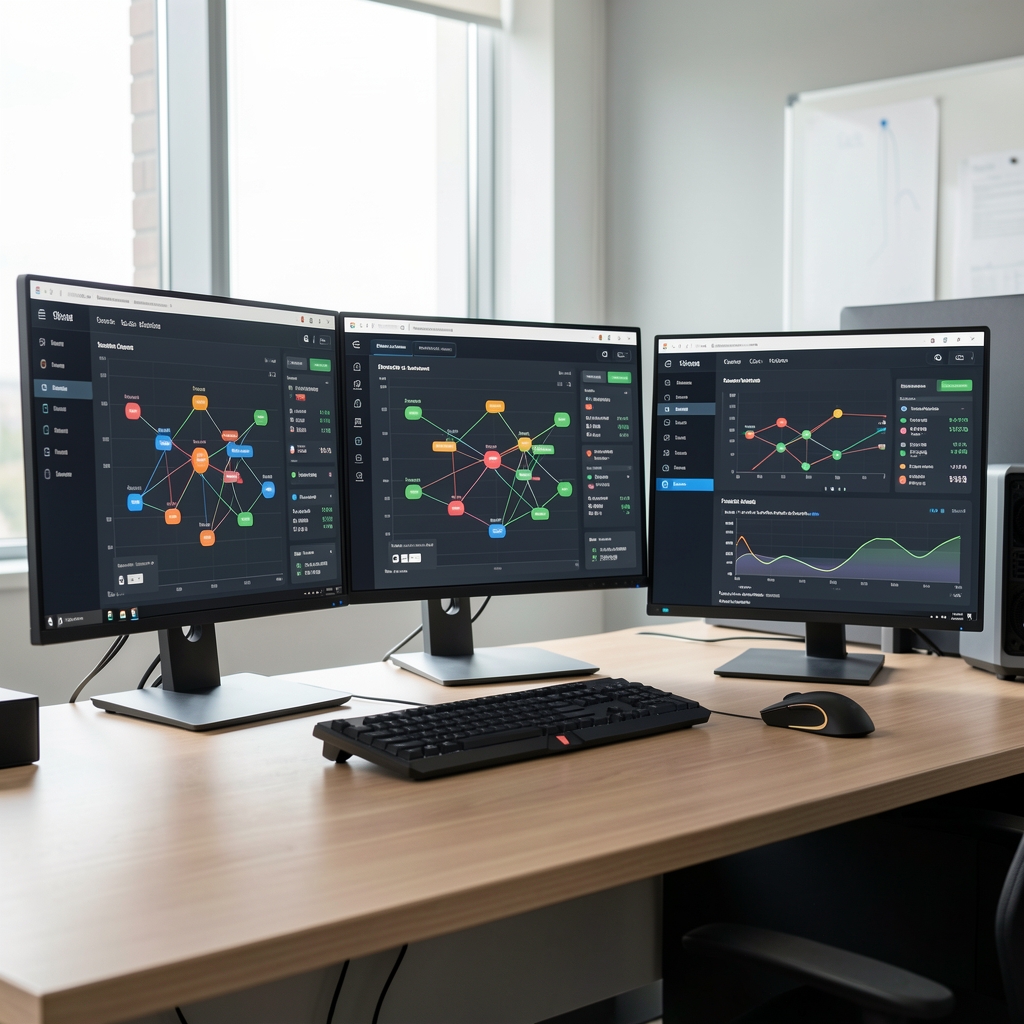
Availability
Operators observe synchronization, peer health, storage, and resource pressure so that a problem can be identified before it becomes a larger incident.
A node is more than a process running on a server. Its reliability depends on software versions, networking, storage, monitoring, access procedures, and the rules of the network it serves. Pequet explains these relationships for learning and research, not as a recommendation to participate.
Operators observe synchronization, peer health, storage, and resource pressure so that a problem can be identified before it becomes a larger incident.

Participation brings procedures around keys, upgrades, alerts, governance, and communication. Those responsibilities differ by protocol and role.
A lifecycle approach helps separate routine maintenance from an emergency response. It also makes responsibilities visible when several people or providers share the work.
| Area | Routine question | Warning sign | Record |
|---|---|---|---|
| Sync | Is the node following the expected state? | Persistent lag | Version and timestamp |
| Storage | Is capacity sufficient for growth? | Rapidly declining space | Trend and threshold |
| Network | Are peers and routes stable? | Repeated disconnects | Event timeline |
| Keys | Who can approve sensitive action? | Unreviewed access | Access register |
“A node is dependable when its normal state is understood, its unusual state is visible, and its operator knows what should happen next.”
Which client version is installed, and how is its source verified?
Who is responsible for ordinary operation, escalation, and approval?
Which logs or records allow a later reviewer to reconstruct an event?
For protocol context, see staking protocols and governance notes.